Fractional CMOs are part-time marketing leaders who step in during critical moments, like stakeholder crises, to provide expert guidance without the cost of a full-time hire. Startups and small businesses often lack the resources and frameworks to manage crises effectively, making these seasoned professionals essential for stabilizing trust with customers, investors, employees, and partners.
Key Takeaways:
- What They Do: Fractional CMOs create crisis communication plans, maintain transparency, and use data to guide decisions.
- Why It Matters: Poorly handled crises - like product failures, social media backlash, or funding issues - can harm trust, revenue, and operations, especially for smaller businesses.
- How They Help: They bring structure with pre-approved templates, escalation procedures, and real-time tools to manage communication and sentiment.
- Flexible Engagement: Fractional CMOs can be hired quickly for short-term needs, offering cost-effective leadership during high-pressure situations.
For startups and SMEs, a Fractional CMO can be the difference between a crisis spiraling out of control or becoming an opportunity to rebuild trust and stabilize operations.
Fractional CMOs & Crisis Management
What Are Stakeholder Crises and Why They Matter
A stakeholder crisis happens when key groups - like customers, investors, employees, partners, or regulators - feel their trust in a company has been broken or their interests harmed. These situations demand immediate attention, as they often bring intense public scrutiny, heightened emotions, and the potential for long-term damage to a company’s reputation. Leadership must act swiftly and decisively to manage these moments effectively.
Take a minor software bug as an example. If it’s resolved quietly, it’s just another routine issue. But if that bug causes a major outage, locking out U.S. customers, and leadership fails to communicate promptly, it quickly escalates into a full-blown stakeholder crisis. The key difference lies in how visible the issue becomes, the emotional toll it takes, and the lasting harm it can inflict on trust, revenue, and operations.
For startups and small to mid-sized businesses (SMEs), these crises can be particularly dangerous. With their heavy reliance on investor confidence, a few key customers, and lean teams, even small problems can threaten funding, revenue, or talent. In these cases, survival often depends on how quickly and effectively leadership can rebuild trust and stabilize relationships.
Common Types of Stakeholder Crises
Stakeholder crises in startups and SMEs often stem from a few common triggers:
- Product or Service Failures: Issues like outages, security breaches, or delayed shipments can quickly erode customer trust. In the U.S., where transparency and quick updates are expected, even a short delay in communication - just 24 to 48 hours - can lead to speculation and harm credibility.
- Negative Publicity and Social Media Backlash: A single viral complaint or a poorly thought-out marketing campaign can dominate social media and spiral out of control, especially for startups with less-established brands.
- Investor Disputes and Funding Issues: Disagreements over growth targets or governance can leak to the public, shaking confidence among investors, employees, and customers. Funding delays or unfavorable terms add to the perception of instability.
- Leadership Changes or Misconduct Allegations: Sudden resignations, internal conflicts, or ethical breaches can raise serious concerns about governance and values. For founder-led companies, these issues can destabilize the entire organization.
- Internal Culture Problems: Mishandled layoffs, discrimination claims, or reports of toxic environments can quickly spill into public view, damaging relationships with employees, customers, and investors alike.
| Crisis Type | Stakeholders Impacted | Escalation Path |
|---|---|---|
| Product failures or outages | Customers, partners, investors | Social media complaints → media coverage → investor questions |
| Negative publicity or PR blunders | Customers, employees, general public | Viral social post → boycotts → revenue impact |
| Investor disputes or funding delays | Investors, employees, partners | Internal disagreement → industry rumors → talent flight |
| Leadership misconduct or exits | All stakeholders | Allegation surfaces → media investigation → board action |
| Internal culture problems | Employees, customers, investors | Employee complaints → public reviews → reputational damage |
Understanding these triggers shows why quick, thoughtful action is so important, particularly for startups and SMEs.
Why Startups and SMEs Face Greater Challenges
Startups and SMEs often struggle more with stakeholder crises due to structural challenges:
- Small Teams, Limited Resources: With few or no dedicated PR, compliance, or crisis management staff, small teams are often stretched thin. They juggle day-to-day responsibilities alongside crisis communication, making it harder to deliver clear, timely responses. A Deloitte survey found organizations with dedicated crisis teams resolve issues 38% more effectively than those without.
- High Dependency on Key Relationships: Many startups rely on a small number of critical customers, investors, or partners. If one of these relationships falters during a crisis, the financial and operational fallout can be immediate and severe.
- Rapid Growth Pressures: Fast growth often leads to rushed product launches, inconsistent customer experiences, or over-ambitious projections. When things go wrong in this environment, the impact feels larger and more emotionally charged, leaving stakeholders questioning leadership.
- Limited Financial Cushion: Crises that lead to churn, lower conversion rates, or delayed deals can quickly drain revenue. Without strong cash reserves, startups often have little room to recover.
- Immature Processes: Many startups lack established crisis playbooks or decision-making frameworks. This often results in improvised responses that can unintentionally worsen the situation.
When crises are handled poorly - through delayed responses, defensive messaging, or lack of transparency - they can magnify reputational damage and prolong financial and operational challenges. For startups and SMEs, this underscores the importance of experienced crisis leadership. Bringing in a seasoned Fractional CMO, for example, can provide the frameworks, messaging strategies, and decision-making structures needed to navigate these moments effectively.
How Fractional CMOs Manage Stakeholder Crises
When chaos strikes, Fractional CMOs bring structured, executive-level expertise to startups and small businesses, offering a level of crisis management that these organizations often lack. Instead of scrambling to improvise, they rely on proven frameworks to guide teams, shape the narrative, and allow leadership to focus on solving core challenges. Their approach revolves around three key practices: preparing a crisis communications plan in advance, maintaining transparency throughout the situation, and using real-time data to make informed decisions. Let’s break down how each of these practices works in action.
Creating a Crisis Communications Plan
A well-thought-out crisis communications plan can mean the difference between smooth coordination and total chaos. Fractional CMOs typically prioritize creating or fine-tuning this plan early in their tenure - long before any crisis arises. The plan outlines who speaks for the company, which communication channels to use, and how decisions get approved, ensuring the team operates efficiently under pressure.
For startups and small businesses with limited resources, the plan is kept practical and focused. It sets clear goals like protecting trust, ensuring safety, and meeting regulatory requirements. It also streamlines decision-making with a simple approval process and focuses on a handful of key communication channels - email, the company website, social media, and, for urgent updates, SMS. Instead of overwhelming the team with an overly complex strategy, Fractional CMOs ensure the plan is realistic and actionable during high-stress situations.
To save time when crises hit, the plan includes pre-approved templates for customer updates, investor communications, and internal memos. It also defines roles clearly, specifying who monitors feedback, drafts and approves responses, and serves as the company’s spokesperson. Escalation rules are spelled out as well, such as when to notify investors, regulators, or the board - triggered, for example, by major media coverage or a surge in customer complaints.
To keep the plan sharp, many Fractional CMOs lead quarterly practice drills, called tabletop exercises. These 60- to 90-minute sessions simulate realistic scenarios like data breaches or product recalls, helping the leadership team identify gaps in their response strategy. After each exercise, the plan is updated based on lessons learned.
A detailed playbook breaks the crisis response into clear phases: detection, assessment, response, and recovery. For example, detection might be triggered by a spike in support tickets, assessment involves leadership reviewing the facts, response begins with the first stakeholder communication, and recovery starts once the immediate issue is resolved. Keeping this playbook easily accessible - often in a shared drive or collaboration tool - minimizes delays and confusion when tensions are high.
| Plan Component | What It Includes | Why It Matters |
|---|---|---|
| Objectives and scope | Protect trust, ensure safety, comply with regulations | Keeps the team focused on priorities during a crisis |
| Roles and approvals | Clear responsibilities for monitoring, drafting, and speaking | Prevents conflicting messages and decision-making bottlenecks |
| Channels and templates | Key channels (email, website, social media) and pre-written notices | Enables fast, consistent communication |
| Escalation rules | Defined thresholds for notifying investors or regulators | Ensures leadership is informed at the right time |
| Tabletop exercises | Quarterly scenario-based drills | Identifies weaknesses and improves the response plan |
Maintaining Transparency and Open Communication
Once a plan is in place, transparency becomes critical to maintaining trust. Even during a crisis, stakeholders expect clear, honest updates. Fractional CMOs ensure communication is straightforward, balancing accountability with legal and operational considerations. They work closely with legal teams to avoid making speculative claims or sharing information that could increase liability, while still delivering messages that are empathetic and reassuring.
Communication is tailored for different groups. Employees often need detailed context about how the crisis impacts their day-to-day work, while customers and investors receive concise updates focused on actions and next steps. Partners may require reassurances about contractual obligations and timelines. This thoughtful segmentation ensures each group gets relevant information without unnecessary oversharing.
Regular updates - often every 24 hours - are key to preventing rumors and speculation. Stakeholders are kept informed about what’s known, what’s still being investigated, and when they can expect further updates. Fractional CMOs advise against "going dark", as silence can be interpreted as indifference or incompetence.
Once the crisis subsides, rebuilding trust becomes the focus. Fractional CMOs often lead efforts to communicate remediation steps, such as product improvements, new safeguards, or policy changes. They might organize founder letters or case studies to share lessons learned, ensuring these messages respect legal boundaries. Internally, leadership is encouraged to acknowledge employee contributions and provide forums for open discussion, like town halls. Externally, reintroducing marketing campaigns that emphasize reliability and customer focus signals that the company has emerged stronger, not just survived the crisis.
Using Data to Guide Decisions
Data is a powerful tool during crises, guiding decisions and reinforcing the response strategy. Fractional CMOs track key metrics in real time to pinpoint confusion, measure the effectiveness of communication channels, and gauge stakeholder sentiment. Common metrics include support ticket volumes, recurring issues, social media sentiment, website traffic to crisis-related pages, and response rates to critical emails or messages.
For example, if social listening tools detect a surge in misinformation on a specific platform, the CMO might prioritize clarifying messages there. Similarly, if support tickets reveal recurring concerns, FAQs can be updated, support scripts adjusted, and outbound messaging refined. Combining operational data with financial metrics ensures decisions are balanced and well-informed.
Fractional CMOs blend quantitative data, like churn rates and campaign performance, with qualitative insights from customer interviews and frontline feedback. Tools such as social listening platforms, reputation monitoring services, and analytics dashboards help them identify which audiences are most affected and what narratives are shaping perceptions.
As the crisis winds down, recovery metrics - like improving sentiment scores, normalizing traffic, and reduced escalation volumes - provide insight into the effectiveness of the response. These metrics also guide longer-term adjustments to brand positioning or product development to prevent future crises.
For instance, if data reveals higher churn rates in a specific region or customer segment, the CMO might launch targeted win-back campaigns, personalized outreach, or product updates to address those concerns. This precision is only possible when data is continuously tracked and analyzed throughout the crisis lifecycle.
sbb-itb-5c5ac24
Tools for Managing Crisis Communication
When it comes to managing a crisis, having the right tools in place can make all the difference. Fractional CMOs depend on a carefully chosen set of digital tools to streamline team coordination, monitor stakeholder reactions, and adjust messaging on the fly. For smaller organizations with limited communication teams, these tools help level the playing field, enabling them to respond as effectively as larger enterprises. The secret lies in selecting flexible, integrated platforms that allow a fractional CMO to quickly jump in and manage responses across multiple channels.
Collaboration and Messaging Platforms
Strong internal communication is the backbone of any successful crisis response. Platforms like Slack and Microsoft Teams are indispensable for keeping teams aligned. These tools support rapid decision-making through dedicated crisis channels, which are typically limited to key players like the CEO, legal counsel, the fractional CMO, and department heads. Using clear naming conventions and file-sharing features, team members can collaborate on draft statements, review legal input, and access the crisis plan - all without jumping between multiple apps. When written communication isn’t enough, integrated video calling makes quick alignment meetings easy.
For external communications, email marketing platforms and CRM systems are critical for delivering crisis updates. Tools with segmentation capabilities are especially useful, allowing fractional CMOs to tailor messages for different audiences such as customers, investors, partners, and media outlets. Instead of sending out generic mass emails, these platforms enable targeted campaigns with tracking features to measure engagement, like open rates and click-throughs.
This combination of real-time internal collaboration and carefully managed external messaging ensures that teams can act quickly without losing accuracy or focus. For instance, a draft email for customers can be reviewed and approved in a Slack channel within minutes, then sent out through an email platform to segmented lists. This seamless coordination makes it possible to monitor stakeholder reactions and adjust strategies as needed.
Monitoring and Analytics Tools
Once internal communication is running smoothly, the next step is tracking how stakeholders are responding. Monitoring tools like Hootsuite and Sprout Social provide real-time insights into brand mentions, relevant keywords, and emerging conversations across platforms like social media, news sites, and forums. These tools can be set up with alerts to notify the fractional CMO of spikes in negative sentiment or unusual activity, enabling quick responses.
Sentiment analysis features offer a clear picture of stakeholder mood by categorizing reactions as negative, neutral, or positive. This data helps guide decisions about whether to tweak messaging, increase communication frequency, or shift focus to different platforms. For example, if misinformation is spreading quickly on Twitter while LinkedIn remains calm, the fractional CMO can prioritize clarifying updates on Twitter while maintaining regular messaging elsewhere.
On the analytics side, tools like Google Analytics and marketing dashboards provide valuable insights into how crisis communications are affecting business metrics. By tracking traffic to crisis-related web pages, conversion rates, email unsubscribe rates, and engagement with key content, fractional CMOs can assess the effectiveness of their messaging. For example, if a blog post designed to reassure stakeholders sees a spike in traffic but a drop in conversions, it may signal that people are seeking information but still have concerns - indicating a need for further trust-building efforts.
Unified dashboards that pull data from multiple sources - social platforms, email systems, website analytics, and CRM tools - give fractional CMOs a comprehensive view of stakeholder behavior. This big-picture perspective is invaluable during fast-moving crises, as it reveals patterns that might be missed when looking at individual platforms. For instance, a drop in email open rates paired with a rise in social media engagement might suggest that stakeholders prefer real-time updates over formal communications.
AI-powered analytics take this a step further by speeding up response times. AI tools can process thousands of comments and mentions in minutes, identifying key themes and concerns that might otherwise take hours to uncover. Automated alerts can flag unusual activity, like a sudden surge in support tickets or negative reviews, giving fractional CMOs a heads-up before minor issues escalate into major problems.
| Tool Category | Primary Use in Crisis | Key Capabilities |
|---|---|---|
| Collaboration & Messaging | Internal coordination | Crisis channels, file sharing, approvals, video calls |
| Email & CRM | External updates | Segmentation, templates, automated campaigns, tracking |
| Social Media Management | Public messaging | Post scheduling, comment moderation, campaign pausing |
| Social Listening & Monitoring | Sentiment tracking | Mention monitoring, keyword tracking, sentiment analysis |
| Web & Campaign Analytics | Measuring impact | Traffic tracking, goal analysis, performance dashboards |
The growing preference for integrated platforms reflects a shift in how crises are managed. Rather than juggling multiple tools, fractional CMOs increasingly opt for solutions that combine collaboration, project management, and communication features. This integration simplifies decision-making and ensures that information flows smoothly between internal discussions and external communications.
For startups and smaller organizations with tighter budgets, many of these tools offer tiered pricing models. Platforms like Slack and Microsoft Teams charge per user per month, with free or affordable entry plans that include core features. Similarly, social media management tools scale based on the number of profiles and users, making it easy for small teams to start with basic functionality and expand as needed.
To streamline operations further, a simple tool playbook can document which tools are used for specific audiences - employees, customers, investors, or media - along with pre-approved message templates and workflows. This kind of documentation is especially helpful for fractional CMOs working on a project basis, as it reduces onboarding time and ensures continuity even if leadership changes.
Finding the Right Fractional CMO Through CMO Index
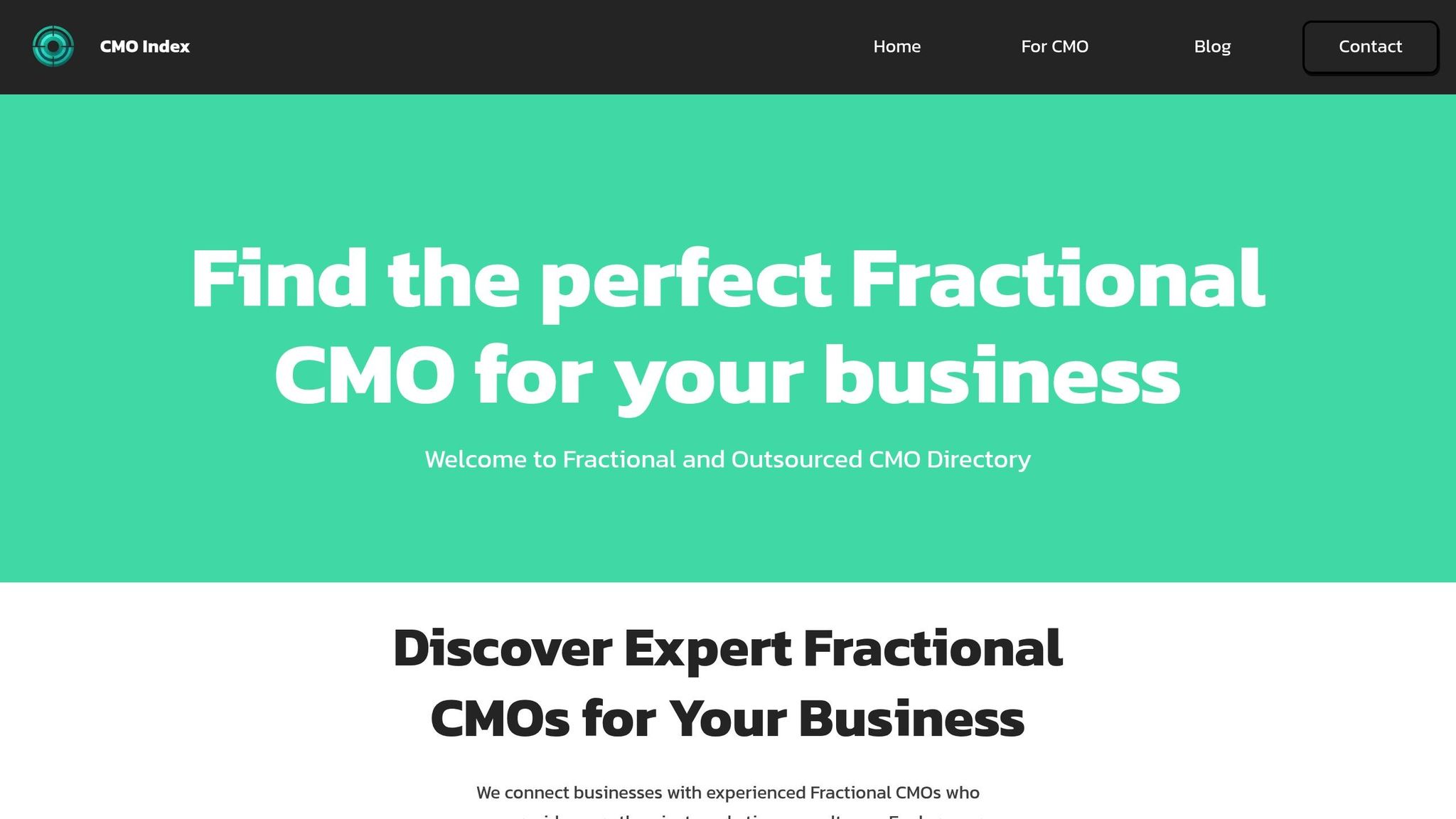
When a crisis strikes, startups and small to mid-sized businesses (SMEs) don’t have the luxury of time. Traditional CMO hiring can drag on for months and rack up significant costs - far from ideal when stakeholders are anxious or a reputational issue is unfolding. That’s where CMO Index steps in, offering U.S.-based businesses a faster, more efficient way to secure senior marketing leadership.
CMO Index is a specialized directory connecting companies with vetted Fractional CMOs who provide executive-level expertise on a flexible basis. For startups or SMEs that can’t justify the expense of a full-time CMO - often a six-figure annual commitment including base pay, bonuses, and benefits - this platform offers a practical alternative. Businesses can access top-tier marketing leadership through hourly consulting, project-based arrangements, or monthly retainers, tailoring the engagement to their immediate needs.
What sets CMO Index apart during high-stakes situations is its focus on crisis management expertise. The platform features over 60 Fractional CMOs with experience spanning more than 20 industries. These professionals specialize in areas like crisis communication planning, executive messaging, media training, reputation protection, and internal communications during challenging times such as leadership scandals or organizational restructuring. For founders navigating PR backlash, product issues, security breaches, or negative press, the ability to quickly find someone with a proven track record in similar scenarios is invaluable.
Streamlined Search for the Right Fit
Instead of relying on local networks or generic hiring sites, CMO Index allows businesses to filter and compare candidates based on criteria specific to their situation. For instance, founders can search for skills like "crisis communication", "PR/reputation management", and "stakeholder engagement", alongside industry-specific experience in areas like SaaS, healthtech, or e-commerce. This ensures the Fractional CMO understands both the communication challenges and the nuances of the industry - critical when managing relationships with investors, customers, employees, and regulators.
Company profiles on the platform often highlight real-world crisis scenarios these CMOs have managed. Examples might include handling product recalls, data breaches, funding delays, or layoffs. Look for measurable outcomes such as retaining key accounts, reducing churn, or restoring Net Promoter Scores. Some CMOs, like David Berkowitz, emphasize expertise in "Content, Comms & Community", which directly supports stakeholder communication. Others bring a focus on customer engagement and brand trust - essential skills when a company’s reputation is on the line.
Preparing for the Search
Before diving into the platform, it’s essential to outline your specific needs. Identify potential crisis risks, map out key stakeholders, and determine the metrics that matter most. Knowing your budget range and estimated engagement length in U.S. dollars will help you quickly narrow down the most relevant candidates. CMO Index offers various pricing options, from hourly rates to monthly retainers, making it easier to find someone who fits your financial and operational requirements.
Once you’ve created a shortlist, evaluate candidates based on their crisis management experience, operational involvement, and communication style. Review their case studies to see how they’ve led cross-functional teams, managed crisis war rooms, and implemented strategies like email campaigns, press briefings, or internal town halls. During interviews, ask how they would approach a 30-, 60-, or 90-day crisis communication plan, and gauge their ability to collaborate with non-marketing teams like finance, legal, and HR.
Asking the Right Questions
To ensure you’re selecting the right leader, ask scenario-based questions that reveal their practical experience. For example:
- "Describe a time you managed a sudden reputational crisis - what actions did you take in the first 24 hours, and what metrics did you track?"
- "How do you coordinate messaging for investors, employees, and customers when delivering tough news like layoffs or missed targets?"
These questions can help you identify candidates with a structured, repeatable crisis playbook rather than those offering ad hoc advice. It’s also worth discussing the tools they use for monitoring sentiment, coordinating messaging, and tracking impact - insights that show whether they can hit the ground running.
For businesses feeling overwhelmed by the selection process, CMO Index provides personalized matching services. This feature is especially valuable when time is of the essence, as it helps founders quickly identify CMOs with the right expertise for their specific challenges.
Seamless Integration for Immediate Impact
Once you’ve selected a Fractional CMO, it’s crucial to integrate them into your team swiftly. Provide access to leadership, communication tools (like email platforms and social media accounts), and any existing crisis documentation. Designate the CMO as the decision-maker for external messaging during defined crisis levels to establish clear accountability. Regular check-ins - daily during active crises and weekly afterward - ensure alignment with marketing, customer support, HR, and investor communications while keeping the CMO connected to operational realities.
Beyond addressing immediate issues, a Fractional CMO from CMO Index can help businesses build long-term resilience. They can develop a crisis communication playbook, train internal teams, and set up monitoring systems. Over time, this strengthens brand trust and improves stakeholder communication, enabling the company to handle sensitive events more effectively without overreacting or damaging relationships.
Common Scenarios and Flexible Engagement
Typical scenarios where a Fractional CMO proves invaluable include startups dealing with viral negative reviews, SaaS companies managing service outages, or founder-led brands handling controversial public statements. In these cases, a seasoned CMO stabilizes communications, reduces churn, and protects company valuation. Businesses can aim for outcomes like faster response times, clearer messaging, improved customer sentiment, and increased investor confidence during and after the crisis.
Given the need for rapid response, it’s important to find CMOs who can work within compatible U.S. time zones or commit to on-call availability for critical incidents. Clarifying whether the engagement will be hourly, project-based, or on a retainer ensures predictable costs while accommodating the intensity of work required during peak crisis periods. This flexibility is one reason why platforms like CMO Index are gaining traction with high-growth startups and SMEs. They offer a way to secure seasoned leadership for complex situations without the financial burden of a full-time C-suite hire. The right Fractional CMO doesn’t just address immediate challenges - they help lay the groundwork for lasting organizational strength.
Conclusion
Crises are an unavoidable reality for startups and small businesses. Whether it’s a product defect, a viral social media incident, a security breach, or layoffs that impact employee morale, these moments can escalate quickly, threatening valuation, partnerships, and customer trust. The companies that weather these storms successfully often share one key trait: strong leadership capable of acting swiftly, communicating effectively, and keeping teams focused under pressure.
As highlighted earlier, Fractional CMOs bring crisis-ready expertise without the commitment of a full-time hire. For businesses working within tight budgets and limited resources, this flexibility can be a game-changer. These seasoned professionals have navigated high-stakes situations before, enabling them to make timely, well-informed decisions about messaging, timing, and communication channels. They expertly juggle legal, operational, and reputational priorities, all while keeping long-term growth objectives in sight - something that junior staff or general marketing teams often struggle to achieve.
Successful crisis management relies on a clear plan, open communication, data-driven strategies, and the right tools. Transparent messaging tailored to different stakeholder groups prevents misinformation and ensures your organization controls the narrative. Tools like social listening platforms and analytics dashboards allow for real-time adjustments, ensuring that messaging aligns with shifting sentiment. Collaboration tools keep teams coordinated, helping even smaller organizations operate with the precision of much larger enterprises.
The importance of this structured approach is backed by data. A Deloitte survey found that organizations with dedicated crisis management teams handled crises 38% more effectively than those without such teams. For startups and small businesses, a Fractional CMO often steps into this role, guiding companies through challenges like service outages, negative customer reviews, or public controversies. Whether it’s stabilizing communications, reducing customer churn, or safeguarding relationships with investors and partners, these leaders help ensure the business remains on track for growth.
If your organization doesn’t yet have a crisis plan, it’s not too late to start. Bringing in a Fractional CMO, even on a temporary basis, can fast-track your readiness. Begin with actionable steps: draft a basic crisis communications plan, identify your key stakeholders, and set up tools to monitor sentiment and feedback. These foundational efforts will give you a significant edge when faced with high-pressure situations.
For U.S.-based founders seeking crisis-ready leadership, CMO Index provides a practical solution. This platform connects businesses with experienced Fractional CMOs who specialize in managing stakeholder communication during challenging times. With a network of over 60 professionals spanning 20+ industries, you can find experts in areas like crisis communication planning, reputation management, and executive messaging. Whether you need hourly advice, project-based support, or ongoing assistance, there’s a match for your needs.
Beyond addressing immediate challenges, a Fractional CMO helps build long-term resilience. They train internal teams, create repeatable crisis playbooks, and embed safeguards into your marketing and communication strategies. This proactive approach not only protects your brand’s reputation but also strengthens the trust and relationships that fuel sustainable growth. When the next crisis hits, you’ll be ready to respond with confidence, turning obstacles into opportunities to reinforce your credibility and trustworthiness.
FAQs
What are the benefits of hiring a Fractional CMO instead of a full-time CMO during a stakeholder crisis?
Hiring a Fractional CMO during a stakeholder crisis can be a smart move for businesses facing high-pressure situations. These professionals bring immediate expertise and a fresh set of eyes to the table, enabling companies to tackle challenges head-on without the delays that come with onboarding a full-time executive.
Another big plus? They're a budget-friendly option. Instead of committing to a full-time salary, businesses can tap into a Fractional CMO's skills and insights on an as-needed basis. This can be especially helpful for startups or small to mid-sized companies working with tighter financial constraints.
What sets them apart is their broad experience across multiple industries. They come equipped with tried-and-tested strategies to handle tricky stakeholder communications, ensuring clarity and trust during critical moments.
How can startups and small businesses work effectively with a Fractional CMO during a crisis?
To work effectively with a Fractional CMO during a crisis, clear communication and well-defined roles are key. Begin by laying out the primary challenges and objectives, making sure the CMO fully grasps the crisis's scope and its impact on key stakeholders. Keeping the lines of communication open with regular updates fosters alignment and builds trust throughout the process.
Fractional CMOs bring a wealth of experience and tools to the table, including crisis communication plans, media management strategies, and data-driven approaches to decision-making. By tapping into their expertise, startups and small businesses can tackle crises more effectively while safeguarding their brand's reputation. The foundation of success lies in building a partnership grounded in transparency and mutual respect.
What metrics and tools do Fractional CMOs use to evaluate the success of crisis communication strategies?
Fractional CMOs lean heavily on specific metrics and tools to evaluate how well crisis communication strategies are working. Key metrics include engagement data - like website traffic, social media activity, and email open rates - along with brand sentiment analysis to understand public perception, and response time tracking to see how quickly issues are being addressed.
To gather this data, they often rely on tools such as social media monitoring platforms, customer feedback systems, and analytics dashboards. These tools provide real-time insights, allowing Fractional CMOs to adjust strategies, communicate clearly, and maintain stakeholder trust during tough situations.