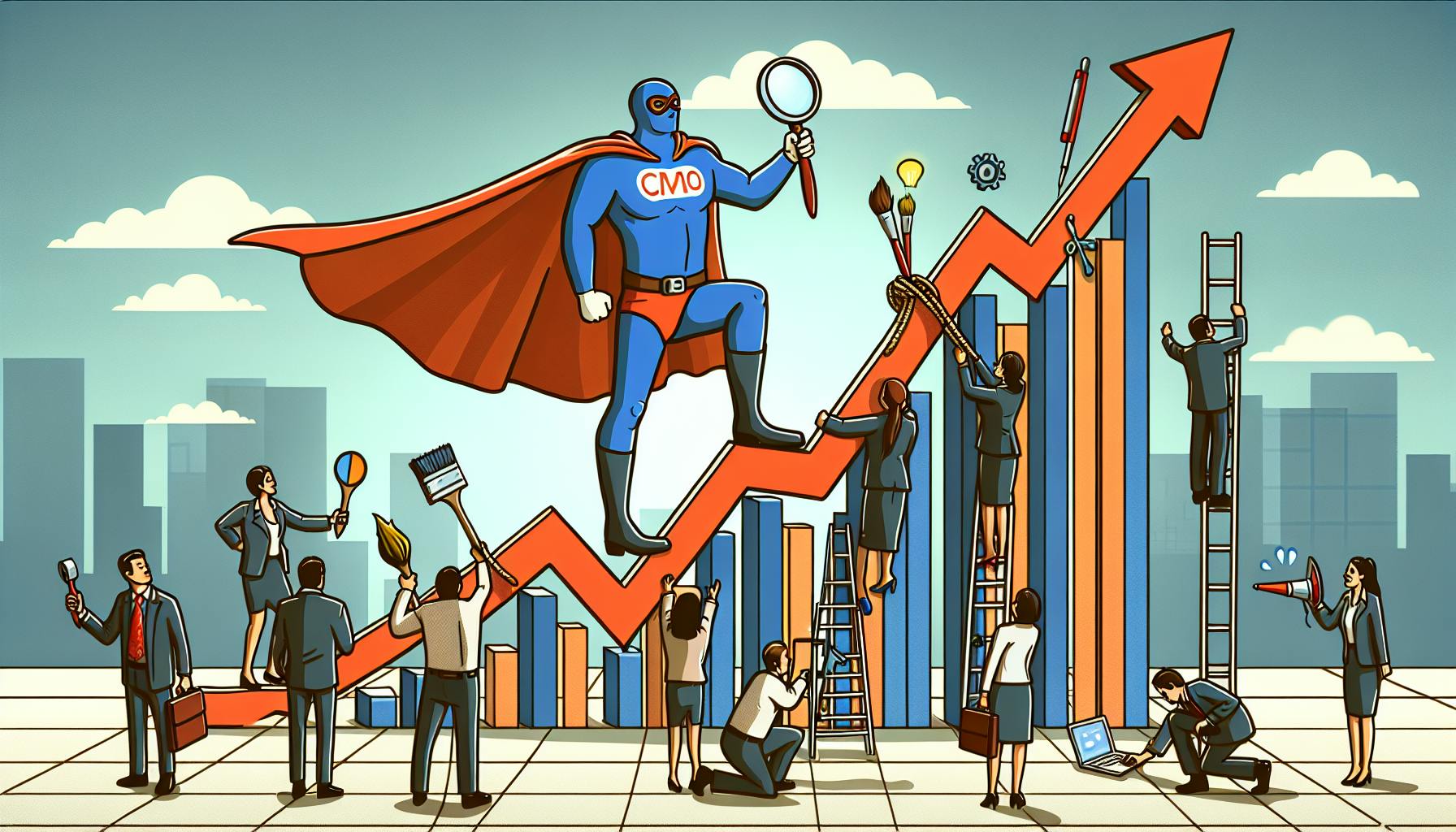
KPIs (Key Performance Indicators) are essential for tracking the success of your marketing channels. They help measure how effectively your efforts align with business goals like increasing traffic, engagement, and revenue. This guide breaks down KPIs into three main categories:
- Traffic and Reach Metrics: Focus on visibility, like website traffic, social media impressions, and email list growth.
- Engagement Metrics: Measure audience interaction, such as click-through rates (CTR), engagement rates, and time on page.
- Conversion and Revenue Metrics: Tie efforts to outcomes, including conversion rates, cost per lead (CPL), and return on ad spend (ROAS).
Each marketing channel - paid ads, social media, email - requires tailored KPIs to track performance accurately. For example, email marketing emphasizes open and click-through rates, while paid ads prioritize metrics like CPC and ROAS. Use dashboards to monitor KPIs in real time and adjust strategies based on data. Regular reviews ensure your KPIs stay aligned with evolving goals, helping you optimize resources and drive growth.
Digital Marketing Metrics & KPI's Explained (With Examples)
Main Categories of Marketing Channel KPIs
When it comes to aligning KPIs with your business goals, organizing your metrics into three main categories can make a world of difference. Instead of drowning in data, group them into Traffic and Reach Metrics, Engagement and Interaction Metrics, and Conversion and Revenue Metrics. Think of these as stages in a funnel: first, you attract your audience, then you measure how they interact, and finally, you assess how well your efforts drive results. This approach simplifies performance tracking and keeps your marketing strategy focused.
Traffic and Reach Metrics
These metrics are all about visibility - how many people see your content and where they’re coming from.
- Website Traffic: Tracks the number of visitors to your site and their sources, like organic search, social media, or paid ads. For instance, if Instagram brings in 10,000 visitors and Twitter only 500, you know where to invest more.
- Post Reach and Social Media Impressions: Reach counts the unique users who see your content, while impressions tally how often it’s displayed (even multiple times to the same user). High impressions but low reach might mean your content is stuck in a loop with the same audience.
- Email List Growth: Measures how your subscriber base grows over time, giving you a direct line to communicate with your audience.
- Share of Voice (SOV): Compares your brand’s mentions in conversations to competitors. For example, if your brand accounts for 30% of industry mentions, you’re dominating the discussion.
- Follower Count and Audience Growth Rate: Tracks not just how many people follow you, but how quickly your audience is expanding.
Without a solid reach, your engagement and conversions will struggle to gain traction.
Engagement and Interaction Metrics
Once you’ve captured attention, the next step is understanding how well your audience connects with your content. These metrics focus on the quality of interaction.
- Click-Through Rate (CTR): Shows the percentage of people who click on your links or calls-to-action. If 10,000 see your ad and 300 click, your CTR is 3%.
- Average Engagement Rate: Compares total interactions (likes, shares, comments) to your audience size. A post with 500 interactions among 10,000 followers has a 5% engagement rate, while one with 1,000 interactions among 50,000 followers only achieves 2%.
- Amplification Rate: Highlights how often your content is shared relative to other engagements, showing its potential to reach new audiences.
- Cost per Engagement (CPE): Calculates how much you spend for each interaction. A $500 campaign with 2,500 engagements results in a CPE of $0.20.
- Time on Page and Bounce Rate: Indicate whether users find your content valuable. Longer time on page suggests they’re engaged, while a high bounce rate may signal the opposite.
- Social Media Engagement Rate per Post: On platforms like Instagram, this metric evaluates likes, comments, and shares in relation to your follower count.
These metrics dig deeper than just reach, revealing whether your content truly resonates with your audience.
Conversion and Revenue Metrics
This is where the rubber meets the road - tying your marketing efforts directly to business outcomes.
- Conversion Rate: Tracks the percentage of users who take a desired action, like making a purchase or signing up for a service. For example, if 5,000 people visit your landing page and 150 convert, your rate is 3%.
- Cost per Lead (CPL): Measures how much it costs to acquire a qualified lead. If Facebook ads cost $25 per lead compared to LinkedIn’s $75, you’ll need to weigh cost against lead quality.
- Customer Acquisition Cost (CAC): Calculates the total expense of acquiring a new customer. Spending $50,000 to gain 500 customers means your CAC is $100.
- Return on Ad Spend (ROAS): Shows how much revenue is generated for every dollar spent on ads. A ROAS of 4:1 means $1 in ad spend brings $4 in revenue.
- Customer Lifetime Value (CLV): Estimates the total revenue a customer will bring over time, helping you decide how much to invest in acquiring them.
- Lead Quality: Ensures you’re attracting prospects who are likely to convert and provide long-term value.
These metrics connect your marketing efforts to tangible business results, showing whether your investment is paying off.
| KPI Category | Primary Focus | Example Metrics | Business Goal Alignment |
|---|---|---|---|
| Traffic and Reach | Audience size and visibility | Website traffic, follower count, SOV | Brand awareness, audience growth |
| Engagement and Interaction | Quality of audience interaction | CTR, engagement rate, time on page | Content effectiveness, interest |
| Conversion and Revenue | Business outcomes and profitability | Conversion rate, ROAS, CAC, CLV | Sales growth, ROI |
KPIs for Specific Marketing Channels
Every marketing channel operates in its own way, so the metrics you track need to align with how users engage with your content on that platform. By tailoring metrics to each channel, you can allocate your budget wisely and play to each platform's strengths.
This channel-specific focus ties back to the broader categories of KPIs: Traffic, Engagement, and Conversion metrics.
Paid Advertising Metrics
When it comes to paid ads, cost efficiency is the name of the game. Every dollar spent should tie back to measurable outcomes, and the following metrics are essential for tracking performance:
- Impressions: This shows how often your ad is displayed. For example, if your ad appears 100,000 times but only gets 2,000 clicks, it might be time to refine your targeting or improve your creative.
- Click-through rate (CTR): This measures how enticing your ad is. Search ads often have higher CTRs (3-5%) because users are actively searching, while display ads typically see lower rates but are better for brand awareness.
- Cost per click (CPC): This tells you how much you're paying for each visitor. CPC can vary significantly depending on the industry and keywords. For instance, while some clicks may cost $2, others in competitive fields like insurance or legal services can exceed $50.
- Quality score: Used in Google Ads, this score evaluates your ad's relevance, landing page experience, and expected CTR. A higher score leads to better ad placements and lower costs, so it's worth continuous improvement.
- Return on ad spend (ROAS): This is the ultimate measure of success. A 3:1 ROAS means you’re earning $3 for every $1 spent. If your ROAS isn’t hitting your target, you may need to refine your targeting, improve your conversion rates, or reconsider the channel.
Social Media Metrics
Social media platforms each have their own personality, and understanding these differences is crucial for meaningful performance tracking. Metrics that work on one platform might not translate to another.
- Instagram: Known for visual content and engagement, key metrics include engagement rate per post (likes, comments, shares compared to audience size), story completion rates, follower growth rate, and bio link clicks. Tracking hashtag performance can also help you reach new audiences.
- LinkedIn: A hub for professional networking and B2B marketing, LinkedIn prioritizes lead quality over quantity. Keep an eye on post engagement, profile views, and connection growth to ensure you're attracting valuable prospects.
- Twitter (X): This platform thrives on real-time interaction. Metrics like impressions, engagement rate, mentions and tags, and link click-through rates help you gauge visibility and relevance. Given its fast-paced nature, frequent monitoring is key.
- YouTube: With its focus on long-form video content, prioritize watch time, as it’s a key factor in YouTube’s algorithm. Track views per video, subscriber growth, thumbnail click-through rates, and engagement rates (likes, comments, shares) to understand your audience’s preferences.
The takeaway? Each platform demands a unique measurement approach. What works on Instagram won’t necessarily translate to LinkedIn or YouTube.
Email Marketing Metrics
Email remains one of the most cost-effective channels, but success hinges on tracking the right metrics. These KPIs give you a clear picture of how well your emails are performing:
- Open rates: Typically ranging from 15-25%, this metric reflects how effective your subject lines are and the quality of your email list. If open rates drop, consider cleaning your list, tweaking subject lines, or adjusting send times.
- Click-through rates (CTR): This measures the percentage of recipients clicking on links in your email. A high open rate but low CTR often signals that your content or call-to-action isn’t resonating.
- Conversion rates: This tracks the percentage of recipients completing your desired action, like making a purchase or signing up for a webinar. If CTR is strong but conversions are low, the issue might lie with your landing page or offer.
- Revenue per email campaign: This metric ties your efforts directly to revenue. For example, if promotional emails generate $5,000 but educational newsletters bring in $500, you can adjust your strategy to focus on what works.
Tracking the entire funnel - from open to conversion - helps pinpoint where to improve. Strong open rates but weak CTRs suggest content issues, while weak conversions point to problems with your landing page or offer. By analyzing these metrics, you can fine-tune your email campaigns for better results.
sbb-itb-5c5ac24
How to Implement and Monitor KPIs
Now that you’ve identified your key performance indicators (KPIs), it’s time to bring them to life. This means creating systems to track performance in real-time, setting realistic targets, and addressing issues before they impact your goals. A well-designed dashboard will be your go-to tool for keeping these metrics organized and actionable.
Creating a KPI Dashboard
A KPI dashboard pulls data from all your channels into one easy-to-read visual summary. This saves you the hassle of jumping between platforms and gives you a clear overview of your performance at a glance. To keep things organized, divide your dashboard into sections for Traffic, Engagement, and Conversion metrics.
Within each category, break it down further by channel. For instance, your social media section could include metrics like engagement rate per post, follower growth, and profile visits. Meanwhile, your paid advertising section might focus on cost per click and return on ad spend.
To make it easier to spot trends, use color-coding: green for on-target metrics, yellow for areas that need attention, and red for underperformance. Tools like Google Analytics let you customize dashboards to display the KPIs that matter most to you and even set up automatic alerts. For example, if your email open rate drops below 15%, you’ll get notified immediately instead of waiting for a monthly report.
Organize your dashboard to tell a story. Start with high-level summaries like total conversions, overall campaign performance, and revenue generated. Then, drill down into channel-specific details and individual campaigns. Use the right visualizations for the data: line charts for trends, bar charts for comparisons, pie charts for traffic distribution, and heat maps to highlight peak performance periods.
Setting Benchmarks and Goals
To measure progress effectively, set SMART goals - specific, measurable, achievable, relevant, and time-bound. These should be based on industry standards and your historical data. For instance, while e-commerce conversion rates typically hover around 2–3%, B2B lead generation campaigns might aim for 5–10% on service pages.
Let’s say your email campaigns have consistently achieved an 18% open rate over the past six months. Instead of aiming for an unrealistic 35% next month, target a gradual improvement, such as 20% within the next three months. Similarly, tie your revenue goals to conversion rates. For example, if you need 200 qualified leads per month, calculate the necessary conversion rate based on your current website traffic.
Instead of vague objectives like “improve website performance,” set clear goals such as:
- “Increase website traffic by 20% within six months.”
- “Generate at least 200 qualified leads monthly.”
- “Achieve a 10% conversion rate for on-page CTAs by the end of Q3.”
Document these benchmarks in your KPI tracking system, assigning responsibility for each metric, noting data sources, and setting reporting schedules. Active campaigns might need daily reviews, while others can be monitored weekly or monthly.
With these benchmarks in place, you can shift your focus to identifying and addressing underperforming channels.
Finding Underperforming Channels with Data
Compare your performance against both your benchmarks and industry standards. For instance, if your email campaign has a 2% conversion rate while the industry average is 4%, it’s a clear sign of underperformance. Pay close attention to cost-efficiency metrics like cost per lead and cost per engagement. High costs paired with low conversions are often a red flag.
Set up automated alerts in your dashboard to catch problems as they happen. For example, if social media engagement suddenly drops by 30%, it could signal changes in platform algorithms or shifts in audience behavior.
Once you’ve identified an underperforming channel, dig deeper to find out which metrics - such as engagement, click-through rate, or conversions - are falling short. Take corrective actions like testing new content formats, refining audience targeting, optimizing landing pages, or reallocating your budget. Monitor the effects of these changes over 2–4 weeks before deciding whether to continue investing in that channel.
It’s also important to evaluate metrics based on their role in the customer journey. For example:
- Traffic metrics are crucial for awareness campaigns.
- Engagement metrics focus on consideration.
- Conversion metrics are key for decision-making.
By understanding these roles, you can better interpret performance and adjust your strategy. Cost per lead is another essential metric, as it helps you compare strategies and decide if higher costs are justified by better conversion outcomes.
Use these insights to refine your approach and allocate resources more effectively.
Improving Your KPI Strategy Over Time
Markets are always changing, and your KPIs should change with them. Think of your KPI strategy as a living framework rather than a static checklist. This approach ensures you're always tracking the metrics that matter most.
When to Update Your KPIs
Your KPIs should evolve as your business goals or marketing channels shift. For instance, if you're moving from a focus on brand awareness to lead generation, metrics like engagement rates won't cut it anymore. You'll need to add KPIs such as conversion rates and cost per lead to measure progress toward these new priorities.
Launching new marketing channels also calls for updated KPIs. If you're starting a YouTube channel, metrics like watch time and subscriber growth become key. Avoid using the same benchmarks as your established platforms - new channels often need a 2–3 month testing phase to establish realistic performance baselines.
Major changes within your organization, such as entering new markets, launching products, or shifting your business model, also warrant a KPI review. These shifts often mean your old metrics no longer align with your new objectives. Additionally, significant changes in customer behavior or competitive landscapes may require you to adjust your measurement strategy.
How often you review your KPIs depends on your business stage and the pace of your industry. Fast-growing startups or businesses in dynamic markets might benefit from quarterly reviews. On the other hand, companies in stable industries may only need to review their KPIs semi-annually or annually. Regardless, having real-time monitoring through dashboards is essential for catching issues as they arise.
Here’s a simple rule to follow: if all your KPIs are improving but your revenue isn't, it's time to rethink your framework. Regular updates keep your strategy data-driven and effective.
Using KPI Data to Improve Results
Data is only as good as the actions it inspires. Instead of just looking at metrics at the channel level, dig deeper into campaign-level performance. Break down metrics like click-through rates, conversion rates, and cost per engagement by individual campaigns, ad sets, or content. This will help you identify what’s working and what’s not - whether it’s the messaging, audience targeting, creative format, or timing.
For example, if one email campaign hits a 15% conversion rate while the industry average sits at 8%, analyze elements like subject lines, send times, or call-to-action buttons to uncover the key drivers of success.
On the flip side, underperforming campaigns require a closer look. If you’re seeing low click-through rates, it might be an issue with your creative or targeting. If traffic is strong but conversions are low, the problem could lie with your landing page or offer. A/B testing is a great way to pinpoint what adjustments make the most impact.
Budget allocation should also be guided by KPI data. Use metrics like return on investment (ROI) or return on ad spend (ROAS) to determine which channels are delivering the best results. Channels with high ROI and low acquisition costs should see increased investment, while underperforming channels may need budget cuts. However, avoid slashing budgets too drastically - start with a 20–30% reduction and monitor the impact.
For instance, if email marketing delivers a 15% conversion rate at $2 per lead, while social media yields a 3% conversion rate at $5 per lead, shifting budget from social media to email could improve your overall efficiency. It’s also smart to reserve 5–10% of your marketing budget for testing new channels or strategies.
Attribution modeling can further refine your efforts. By understanding how different touchpoints - like a social media ad leading to an email conversion - contribute to the customer journey, you can optimize the entire funnel instead of focusing on individual channels. For businesses looking to take their strategy to the next level, fractional CMOs can streamline this process.
Working with Fractional Marketing Leaders
Fractional marketing leaders bring fresh expertise to fine-tune your KPI strategy. These professionals specialize in selecting, implementing, and optimizing KPIs that align with your business goals. They can conduct audits of your current framework, identify gaps, and recommend improvements based on industry standards and best practices.
Fractional CMOs can pinpoint the KPIs that matter most for your business and industry. They help set up dashboards, establish realistic targets, and create reporting systems that keep teams accountable. Their outsider perspective often reveals blind spots that internal teams might miss.
Platforms like CMO Index connect businesses with experienced fractional CMOs. With over 60 professionals listed and experience across 20+ industries, the platform makes it easy to find tailored solutions. These experts bring skills in areas like product marketing, B2B tech, and ROI-focused strategies. Plus, fractional CMOs typically offer flexible, cost-effective engagements, making their expertise accessible even for businesses with tight budgets. Beyond setting up KPIs, they can assist with implementing marketing tech stacks and training teams on data-driven decision-making.
Conclusion: Using Marketing Channel KPIs for Growth
Marketing channel KPIs serve as essential tools that bridge your marketing efforts with measurable business outcomes. These indicators provide clear insight into how well your marketing strategies align with and achieve your business goals. When used effectively, they turn raw numbers into actionable insights that can fuel growth.
The most effective KPI strategies directly tie metrics to your objectives. For instance, if your goal is to boost brand awareness, engagement metrics like social shares or time spent on your site should take center stage. On the other hand, if driving sales is the primary focus, conversion rates and customer acquisition costs become the key indicators to monitor.
Each marketing channel has its own unique dynamics, which means your metrics should be customized accordingly. For example, email marketing thrives on metrics like open rates and click-through rates, while paid advertising hinges on cost per lead and return on ad spend. The most successful businesses pay attention to metrics across three main areas: campaign reach (e.g., impressions, email sends, page views), campaign engagement (e.g., clicks, bounce rates, social shares), and campaign results (e.g., sales, conversions, brand recall).
Cost per lead remains a critical benchmark, helping justify investments by assessing the quality of the leads generated.
As highlighted in the KPI dashboard section, regular monitoring is crucial for staying responsive and refining your strategies. Weekly reports can help track tactical metrics, monthly reviews are ideal for conversions, and quarterly updates work best for evaluating long-term indicators. This consistent oversight helps identify issues early, giving you the opportunity to optimize campaigns in real time.
KPI insights also guide strategic adjustments, such as reallocating budgets or fine-tuning campaigns. For example, low conversion rates might signal immediate problems that need addressing. Comparing performance across channels helps pinpoint where to invest more resources and where to scale back. Tools like Google Analytics and platform-specific analytics provide the data needed to make informed decisions. These targeted adjustments ensure your metrics directly contribute to measurable growth.
For businesses seeking expert guidance, fractional marketing leaders from CMO Index offer a practical solution. CMO Index connects startups and small to mid-sized businesses with seasoned fractional CMOs across various industries, giving you access to strategic expertise without the expense of a full-time hire. These professionals can help build frameworks, set achievable targets, and turn data into actionable growth plans.
As your business evolves, so should your KPI strategy. Regularly reviewing and updating your metrics ensures they remain aligned with your current goals. Ultimately, the real measure of success isn’t just improving individual KPIs - it’s about whether they collectively drive meaningful business growth and revenue. When your KPI framework aligns with your objectives, delivers actionable insights, and adapts to change, it becomes a powerful tool for long-term success.
FAQs
How can businesses customize KPIs for different marketing channels to track performance effectively?
To set effective KPIs for different marketing channels, the first step is to pinpoint the specific objectives for each channel. For instance, social media efforts might center around engagement metrics like click-through rates or the number of shares, whereas email campaigns could focus more on open rates and driving conversions.
It's equally important to ensure these KPIs align with your broader marketing strategy and are easy to measure. Leverage analytics tools to track performance consistently, and make it a habit to review the data regularly. This approach allows you to refine your strategy as needed. By tailoring KPIs to match the distinct role of each channel, businesses can uncover precise insights and make smarter decisions to improve their marketing outcomes.
How can businesses use KPI data to identify and improve underperforming marketing channels?
To tackle underperforming marketing channels, the first step is diving into your KPI data. Look for signs like low engagement rates, high customer acquisition costs, or weak conversion rates. These patterns can reveal which areas aren't meeting expectations and need attention.
After identifying the problem channels, experiment with potential fixes. This might include tweaking your targeting strategies, improving ad creatives, or shifting your budget toward channels that are delivering better results. Keep an eye on the updated KPIs to see how these adjustments are working and to maintain steady progress. Relying on data to guide your decisions is essential for getting the most out of your marketing efforts.
How often should businesses revisit their KPI strategies to stay aligned with market changes and evolving goals?
Businesses need to revisit and adjust their KPI strategies at least every quarter to stay in tune with evolving market conditions and organizational goals. These regular check-ins are essential for spotting trends, addressing any performance shortfalls, and responding to shifts in customer behavior or industry changes.
If you're operating in a fast-moving industry or navigating a major transition - like launching a new product or expanding into a new market - monthly reviews might be more appropriate. This approach helps you stay ahead of the curve and ensures your KPIs remain focused on your business's top priorities. Flexibility is key to keeping your strategy effective and relevant.